How Long Can Food Sit Out at a Party Before It's Unsafe
We earn from qualifying purchases. How we pick.
Our top picks
- Best for spot checking buffet dishesTempSwift TP19H Instant Read ThermometerCheck price on Amazon →
- Best for holding several hot dishes indoorsElectric Warming Tray (21 x 16 in)Check price on Amazon →
- Best for long parties away from outletsDisposable Chafing Buffet Set with 6 Hour FuelCheck price on Amazon →
Perishable party food can sit out for two hours at room temperature. Above 90°F that drops to one hour. Past that point it goes in the trash. That’s the rule from the USDA and the FDA. It’s the same at a backyard barbecue as it is at a holiday open house.
In this guide
How the two hour clock works
Bacteria grow fastest between 40°F and 140°F. Food safety people call that range the danger zone. University of Illinois Extension says bacteria there can double in as little as 20 minutes. Under ideal conditions one cell can turn into a million in about 5 hours.
The two hours is total time. It doesn’t reset. Twenty minutes in the car plus an hour on the table plus forty minutes while everyone chats adds up to two hours.
And you can’t fix it later. Illinois Extension uses a pork roast left out for three hours as its example. Reheating won’t make it safe. Neither will the fridge or the freezer. Freezing only pauses bacteria. It doesn’t kill them. Your nose won’t save you either. Food can look and smell and taste fine while still carrying enough bacteria to make guests sick.
The clock applies to anything perishable. That means meat, poultry, fish, dairy, cooked leftovers and cut fruit and vegetables. Dry snacks like crackers, cookies and bread aren’t the worry here.
Rice deserves a special mention. N.C. Cooperative Extension explains that cooked rice can carry spores of Bacillus cereus. Cooking doesn’t kill them. If the rice cools slowly or sits out the spores grow and make a toxin. That toxin survives reheating no matter how hot you go. Symptoms show up 1 to 6 hours after eating. So a big pan of fried rice or a rice salad should never linger. For leftovers the extension target is cooling rice from 135°F to 70°F within 2 hours. Miss that and it goes in the bin.
Watch old family recipes too. The FDA lists homemade Caesar dressing, eggnog, custards and chocolate mousse as dishes that may use raw or lightly cooked eggs. Those are riskier for pregnant guests, young kids and older adults.
Keeping hot food hot
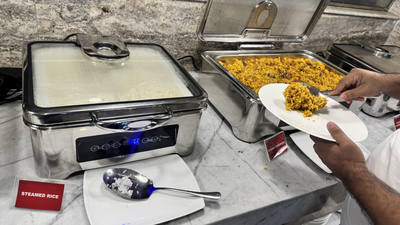
Hot dishes need to stay at 140°F or above. Do that and the two hour clock stops mattering. The Minnesota Department of Health suggests chafing dishes, slow cookers or warming trays.
One catch from the FDA: some warmers only hold food at 110°F to 120°F. That’s right in the danger zone. Check the label before you trust it. Then check the food itself with an instant read thermometer about once an hour.
TempSwift TP19H Instant Read Thermometer
A quick probe tells you in seconds if the chili is still above 140°F or the dip is still under 40°F. It's the only way to know for sure.
What to like
- Fast readings
- Folds away for storage
- Works for cooking and holding
Watch out for
- Needs a battery
- Not a leave in probe
A plug in tray handles several pans at once. We cover the options in our guide to food warmers for parties.
Electric Warming Tray (21 x 16 in)
A large flat surface keeps casseroles and sides warm on the table. Adjustable heat lets you turn it up for dense dishes.
What to like
- Large surface
- Adjustable temperature
- No flames or fuel
Watch out for
- Needs an outlet nearby
- Thick dishes heat slowly
For a long outdoor party disposable chafers make sense. Fuel cans rated for six hours mean nobody has to swap burners halfway through.
Disposable Chafing Buffet Set with 6 Hour Fuel
Racks and pans and fuel come together. The six hour cans cover most parties without a refill.
What to like
- Works anywhere
- Long burn time
- Easy cleanup
Watch out for
- Single use pans
- Open flame needs watching
7 Quart Manual Slow Cooker
The warm setting holds saucy food at a safe temperature for hours. Seven quarts covers a crowd.
What to like
- Simple controls
- Big capacity
- Lid keeps heat in
Watch out for
- Takes counter space
- Manual means no auto shutoff
Keep backups somewhere safe. The FDA suggests holding hot extras in an oven set at 200°F to 250°F. Egg dishes like quiche that were chilled should be reheated to 165°F before serving.
Keeping cold food cold
Cold food needs to stay at 40°F or below. The Minnesota Department of Health suggests nesting dishes in bowls of ice. A large oval tub packed with ice works well for shrimp or a pasta salad. Drain meltwater so the bowl stays sitting in ice.
Small platters beat one giant tray. Prep several and keep them in the fridge. Swap a nearly empty platter for a fresh one. Don’t top up a dish that’s been out. The FDA points out that hands reaching in add bacteria and the old food has already used up part of its clock. Our buffet setup guide has more on layout.
Outdoors you’ve also got flies to deal with. Covers won’t fix temperature but they keep bugs off.
Mesh Food Covers (2 jumbo and 4 large)
Pop up mesh tents sit over plates and bowls so flies can't land. They fold flat between parties.
What to like
- Several sizes
- Fold flat
- Guests can still see the food
Watch out for
- Don't keep food cold
- Light enough to blow over
When the party winds down
Leftovers follow the same two hour rule. That includes the plates you send home with guests. Tell them to get it in the fridge as soon as they arrive.
Use shallow containers. The Minnesota Department of Health says shallow portions cool quickly and evenly in the fridge. A deep pot of chili can stay warm in the middle for hours.
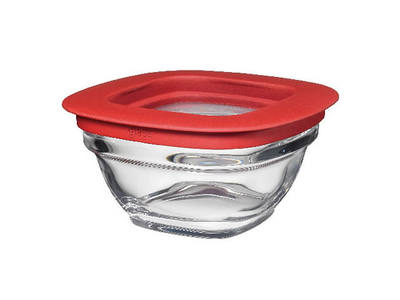
Simply Store Glass Food Storage Set (12 pack)
Mixed sizes let you split big batches into shallow portions. Lids press on so stacking in the fridge is easy.
What to like
- Several sizes
- Glass reheats well
- Lids included
Watch out for
- Heavier than plastic
- Glass can break
If you can’t remember when a dish went out then throw it away. Better yet set a phone timer for 90 minutes the moment food hits the table. That leaves you a half hour buffer to swap platters or pack things up.
Sources
- Serving Up Safe Buffets, U.S. Food and Drug Administration
- Buffet food safety, Minnesota Department of Health
- How Important is the 2 Hour Rule?, University of Illinois Extension
- Safety of Leftover Rice, N.C. Cooperative Extension
How we picked
We compare maker specs with owner reviews and expert sources like food safety guidance and caterer serving rules. We look for the problems owners report again and again. Then we keep the products whose specs fit feeding a crowd at home. These picks come from that research and not from our own hands on trials. Nobody pays for a place in our guides. Read how we choose products.